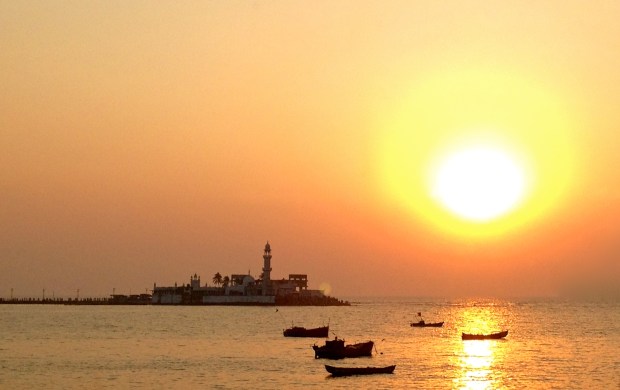
I spent my winter break lounging in the wonderful city of Mumbai, India. India is all about the shopping, eating, and meeting people. So, food is a big part of the experience. Thankfully, Indian food, for the most part, is gluten-free. Identifying what ingredients each dish contains, however, can be quite a daunting task. But if you know what to keep your eyes and ears open for, you’ll be in good shape!
North Indian food is compromised of breads and rices, grilled meats (tandoori), vegetables, curry-based meats, and lentils. Obviously, the breads such as naan, rotis, chapatis, and parathas are not gluten-free. Although, there is one corn flour based “tortilla-esque” flat bread called makki ki roti (makki is corn in Hindi). Makki ki roti is most often gluten-free, but one should always double check with the chef. In order to properly communicate with the chef, ask if the bread contains any atta, maidha, or rava (these words are all synonymous with wheat flour… rye, bran, and barley are not used in Indian cooking). In terms of rice options, meals can be served with plain, white basmati rice or as a biryani. Biryani is always gluten-free. It is essentially rice cooked with spices and topped with chicken, fish, or vegetables. As for grilled meats, they are usually cooked in a tandoor, which is a clay oven that can withstand extreme temperatures. Most tandoori meats are pre-marinated and typically are gluten-free, but again always double check with the chef. Now on to the rather broad category of vegetables. Some vegetable dishes such as palak paneer (blended spinach) and navratan korma (vegetables in a cashew-based curry) are very thick and rich. It is unlikely, but occasionally, a chef may use wheat flour as a thickener in these dishes. Almost all other North Indian vegetable dishes are gluten-free. Curry-based meats are basically the same type of deal. It’s almost always gluten-free, but once in a blue moon, a restaurant may use wheat flour so communicate with the staff to ensure your food is gluten-free. Lentils, also known as dal, are always gluten-free.
Now, South Indian food is a whole different ball game, but it’s honestly much easier to figure out. It is primarily vegetarian and consists of almost all gluten-free breads, lentils, and vegetables. What I said regarding the lentils and vegetables for North Indian food applies for South Indian food as well. And as for the “almost all gluten-free breads”, South Indians eat a whole variety of them. This includes idlis (white rice balls), dosas (crepe-like flat bread made from a rice batter), uttapam (essentially a thick dosa), and appam (pancake-like flat bread made from a rice batter and coconut milk). Now, the reason I say “almost all gluten-free breads” is because rava dosas are not gluten-free. Rava is one of the words that are synonymous with wheat flour that you have to watch out for.
It’s really quite simple! Being gluten-free does not and will not limit you from immersing in the culture and tastes of India. Now of course you can enjoy other cuisines just as well in India! Here are a few restaurants in which I had great experiences…
- Smokehouse Deli, Paladium Mall
- The Konkan Cafe, Vivanta (Taj President) Hotel
- China Bistro, Worli
- Sea Lounge, Taj Mahal Palace Hotel
- Village, Mumbai World Trade Center
- Jewel of India, Worli
- Copper Chimney, Worli
Cheers!
Anika

 The Gluten-Free You
W are based in Mumbai and deals in variety of Gluten free products anyone looking for it please contact us on 9820559815.
Hi! I am visiting Mumbai in June to August & would appreciate help in sourcing gluten free breakfast cereals/breads/flour. Please advise. I will be staying on Warden Road, Sourh Mumbai & my email add: sunita_advaniuk@yahoo.co.uk. Any help would be greatly appreciated. Thanks. Sunita Advani